Mastering Visual Communication with Ribbon 3D Arrow Graphics
In the fast-paced world of digital communication, clarity is not just a preference; it is a necessity. Whether you are designing a corporate presentation, crafting an engaging social media post, or laying out a complex infographic, the ability to guide the viewer’s eye is paramount. This is where the Ribbon 3D Arrow emerges as an indispensable tool for modern creators. Unlike flat, two-dimensional symbols, these three-dimensional elements add depth, realism, and a tactile quality to visual designs, making them stand out in a crowded digital landscape.
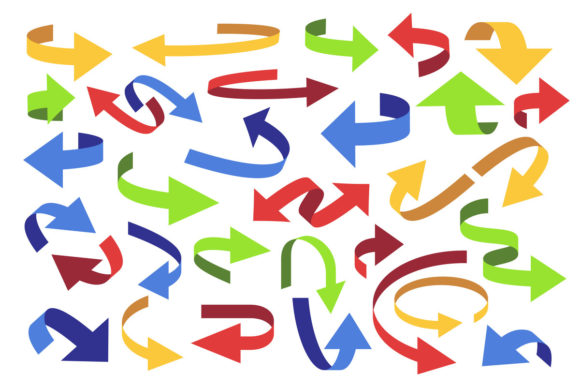
The integration of a Ribbon 3D arrow into your design toolkit offers more than just aesthetic appeal. It provides a functional mechanism for directing attention, illustrating processes, and highlighting critical data points. From colorful pointers that draw immediate focus to elegant curved tape arrows that suggest flow and movement, these vector isolated symbols are designed to enhance comprehension while maintaining professional polish.
The Evolution of Directional Design Elements
Historically, arrows in graphic design were simple, utilitarian lines. However, as user interfaces have become more sophisticated and business presentations more visually demanding, the need for richer visual cues has grown. The Ribbon 3D Arrow represents this evolution. By simulating light, shadow, and perspective, these graphics mimic physical objects, creating a sense of presence on the screen.
Consider the difference between a standard black arrow and a curved tape arrow with a glossy finish and subtle drop shadow. The latter does not merely point; it invites the viewer to follow a path. This psychological effect is crucial in marketing and education, where guiding the user through a narrative or a set of instructions is key to retention and conversion.
Key Features and Characteristics
When evaluating a set of Ribbon 3D Arrow assets, several distinct features contribute to their versatility and value:
- Depth and Realism: The 3D rendering provides a lifelike appearance that flat icons cannot match, adding a layer of sophistication to any project.
- Variety of Forms: A comprehensive set includes flip arrows, swirl web buttons, and directional labels, allowing for diverse applications.
- High-Resolution Output: With source files such as a JPEG file at 6000x4500 pixels, users ensure crisp quality even when scaled for large-format prints or high-density displays.
- Customizability: While delivered as high-resolution images, the best practices suggest using vector editors like Adobe Illustrator for separate element manipulation, ensuring total creative control.
Practical Applications Across Industries
The utility of the Ribbon 3D arrow extends far beyond simple decoration. Its application is rooted in functionality, serving specific roles in various professional contexts.
Business Presentations and Financial Reporting
In the corporate sector, data visualization is critical. Price up to and down business presentation arrows are essential for financial reports, stock market analyses, and sales dashboards. A green, upward-curving 3D ribbon instantly communicates growth, while a red, downward-pointing arrow signals a decline. The three-dimensional aspect adds weight to these indicators, making trends feel more tangible and urgent to stakeholders.
Furthermore, when outlining strategic roadmaps, directional labels created with 3D ribbons can delineate phases of a project. The visual separation provided by the ribbon’s form helps audiences distinguish between past achievements, current initiatives, and future goals without relying solely on text.
Web Design and User Interface (UI)
For web designers, swirl web buttons and interactive pointers derived from Ribbon 3D Arrow sets can enhance user experience (UX). These elements serve as call-to-action (CTA) triggers. A colorful pointer hovering over a "Sign Up" button, for instance, draws the eye naturally due to the contrast in dimension and color. Because these symbols are often vector-isolated, they can be easily integrated into CSS animations or hover states, providing dynamic feedback to users.
The curved tape arrow is particularly effective in tutorial overlays or onboarding screens. It can wrap around interface elements, suggesting interaction without obstructing the view. This subtle guidance reduces cognitive load, helping new users navigate complex applications with ease.
Educational Content and Infographics
Educators and content creators rely on visual aids to simplify complex information. A set of Ribbon 3D Arrow graphics allows for the creation of engaging flowcharts and process diagrams. For example, in a biology lesson explaining the water cycle, 3D arrows can illustrate the movement of evaporation, condensation, and precipitation with a clarity that flat lines lack. The visual interest keeps students engaged, while the clear directionality reinforces the logical sequence of events.
Technical Considerations and File Management
Understanding the technical specifications of your design assets is crucial for efficient workflow. The product file typically includes a high-resolution JPEG file 6000x4500 pixels. This resolution is ideal for immediate use in digital presentations, web banners, and standard print materials. However, professionals often require more flexibility.
Note on Editing: If you want to separate elements, remove or edit something, please use a vector editor e.g., Adobe Illustrator. While the JPEG provides a ready-to-use image, it is a raster format. To change the color of a specific ribbon, adjust the curvature of an arrow, or isolate a single pointer from a group, vector editing software is necessary. This step ensures that the integrity of the 3D shading and lighting remains consistent even after modification.
For those without access to advanced vector tools, the high-resolution JPEG still offers significant value. The 6000x4500 pixel dimensions allow for substantial cropping and resizing without noticeable loss of quality, making it a versatile option for general consumers and small business owners who need quick, professional-looking graphics.
Evaluating Suitability for Your Projects
Not every project requires the complexity of 3D elements. When deciding whether to incorporate a Ribbon 3D Arrow into your design, consider the following factors:
- Brand Identity: Does your brand lean towards modern, sleek minimalism, or does it embrace bold, dynamic visuals? 3D ribbons suit brands that want to appear innovative and energetic.
- Context Clutter: In already busy designs, adding 3D elements might increase visual noise. Use colorful pointers sparingly to highlight only the most critical information.
- Platform Constraints: Ensure that the file size and format are compatible with your publishing platform. While JPEGs are widely supported, vector formats (SVG, AI) are preferable for responsive web design.
- Audience Expectation: For formal legal or academic documents, flat, standard arrows may be more appropriate. For marketing, tech, and creative industries, 3D elements are often expected and appreciated.
Strengths and Limitations
The primary strength of the Ribbon 3D Arrow lies in its ability to capture attention. In an era of information overload, standing out is half the battle. The realistic shading and vibrant colors make these arrows impossible to ignore. Additionally, their versatility across different media—from PowerPoint slides to Instagram stories—makes them a cost-effective investment for creators.
However, there are limitations. As mentioned, editing rasterized JPEGs is restrictive compared to native vector files. Users must plan their layout carefully before finalizing the image. Furthermore, overuse of 3D effects can lead to a dated aesthetic if not balanced with clean typography and ample white space. The key is moderation and intentional placement.
Conclusion: Enhancing Clarity Through Design
The Ribbon 3D Arrow is more than a decorative icon; it is a functional component of effective visual communication. By leveraging the depth, directionality, and visual appeal of these graphics, professionals can create more engaging, understandable, and persuasive content. Whether you are illustrating a financial trend with price up to and down business presentation arrows, guiding a user with a swirl web button, or clarifying a process with a curved tape arrow, these tools empower you to tell your story with precision.
For general consumers, professionals, and business owners alike, integrating high-quality directional symbols into your design workflow is a step toward greater clarity and impact. By understanding the features, applications, and technical requirements of these assets, you can make informed decisions that elevate your visual projects from ordinary to exceptional. Remember, the goal is not just to point, but to guide, inform, and inspire action.