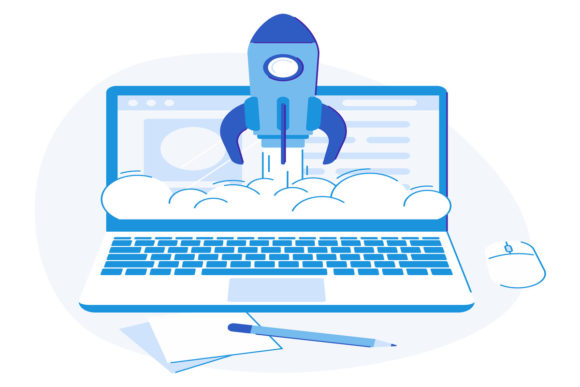
Laptop Startup: Accelerating Business Innovation Through Digital Strategy
In the contemporary digital landscape, the concept of a Laptop Startup has evolved far beyond its literal interpretation. It no longer refers merely to the physical act of powering on a device; rather, it symbolizes the rapid deployment of agile business models, the launch of innovative web strategies, and the immediate execution of creative solutions. For entrepreneurs, creators, and established enterprises alike, the ability to initiate a project with the speed and precision of a laptop booting up is a critical competitive advantage. This metaphorical framework aligns perfectly with modern demands for efficiency, where web creative strategy success is measured by how quickly an idea can transition from conception to market presence.
The visual imagery often associated with this phenomenon—a launch rocket logo or a flat vector illustration of a rocket launching alongside digital devices—captures the essence of this momentum. These symbols are not just decorative; they represent the trajectory of growth that businesses aim for when they leverage technology effectively. Whether you are a hobbyist building a personal brand or a researcher disseminating findings, understanding the mechanics of a successful digital launch is essential. The integration of business internet startups into traditional workflows has democratized access to global markets, allowing anyone with a computer and an internet connection to compete on a level playing field.
The Architecture of Rapid Deployment
To achieve true Laptop startup velocity, one must understand the underlying architecture that supports rapid deployment. This involves a synergy between hardware capabilities, software efficiency, and strategic planning. The modern professional does not have the luxury of time-consuming setup processes. Instead, they require systems that are ready to perform immediately. This is where the concept of websites innovation investment comes into play. Investing in robust, scalable web infrastructure ensures that when the "rocket" launches, it has the fuel to sustain its ascent.
Consider the role of vector illustrations in this ecosystem. A high-quality asset, such as a product file containing a flat vector illustration of a rocket launching, serves multiple purposes. It provides visual consistency across platforms, scales without loss of quality, and communicates professionalism. For instance, a One JPEG file 4500x4500 pixels might be used for high-resolution marketing materials, but the source vector allows for infinite flexibility. If you want to separate elements, remove or edit something, please use a vector editor like Adobe Illustrator. This flexibility is crucial for maintaining brand identity across diverse media, from social media icons to large-format banners.
Strategic Advantages of Agile Web Solutions
The primary benefit of adopting a Laptop Startup mindset is agility. Traditional business models often suffer from bureaucratic inertia, slowing down decision-making and implementation. In contrast, agile web solutions allow for iterative development. You can launch a minimum viable product (MVP), gather feedback, and refine your approach in real-time. This cycle of continuous improvement is driven by data and user interaction, ensuring that the final product meets actual market needs rather than hypothetical assumptions.
- Speed to Market: Reducing the time between idea generation and public availability.
- Cost Efficiency: Leveraging cloud-based tools and remote work capabilities to minimize overhead.
- Scalability: Using modular web architectures that can grow with the business.
- Global Reach: Accessing international audiences from day one through optimized digital presence.
These advantages are particularly relevant for business solutions providers who need to demonstrate value quickly. By focusing on core functionalities and eliminating unnecessary complexity, startups can deliver impactful results without the burden of legacy systems. This approach also encourages innovation, as teams are free to experiment with new technologies and methodologies without being constrained by rigid infrastructures.
Visual Identity and Brand Perception
In the digital realm, first impressions are formed within milliseconds. The visual elements associated with your brand, such as a launch rocket logo, play a pivotal role in shaping user perception. A well-designed logo conveys energy, progress, and ambition. It signals to the audience that your business is forward-thinking and dynamic. However, the effectiveness of these visual assets depends on their technical quality and adaptability.
When working with digital assets, it is important to understand the difference between raster and vector formats. While a One JPEG file 4500x4500 pixels offers high resolution for specific uses, it lacks the flexibility of vector graphics. Vector files, such as those created in Adobe Illustrator, allow designers to manipulate individual components of an image. This means that if you need to adjust the color scheme of your rocket illustration to match a seasonal campaign, you can do so effortlessly. Furthermore, vectors ensure that your branding remains crisp and clear on any device, from smartphones to 4K monitors.
The use of flat vector illustration styles has become prevalent in modern web design due to its clean aesthetics and fast loading times. These illustrations simplify complex concepts, making them easier for users to understand. For example, an illustration depicting websites innovation investment might show a graph trending upward alongside digital devices, instantly communicating the value proposition. This visual clarity enhances user engagement and reduces bounce rates, contributing to overall web creative strategy success.
Implementing Effective Business Internet Strategies
For business internet startups, the challenge lies not just in creating a website, but in creating a comprehensive digital ecosystem. This includes search engine optimization (SEO), content marketing, social media integration, and customer relationship management (CRM). Each component must work in harmony to drive traffic, convert leads, and retain customers. The Laptop Startup model emphasizes the integration of these tools into a seamless workflow.
One effective strategy is to leverage automation tools that streamline repetitive tasks. By automating email campaigns, social media posting, and data analysis, businesses can focus on high-value activities such as strategy development and creative content creation. This efficiency mirrors the quick boot-up time of a modern laptop, where systems are optimized for immediate productivity. Additionally, utilizing cloud-based collaboration platforms enables teams to work together seamlessly, regardless of their physical location.
- Audit Current Assets: Evaluate existing digital properties and identify areas for improvement.
- Define Clear Objectives: Establish measurable goals for traffic, conversion, and engagement.
- Optimize Technical Performance: Ensure fast loading speeds, mobile responsiveness, and secure connections.
- Create Compelling Content: Develop valuable, relevant, and consistent content to attract and retain audiences.
- Analyze and Adapt: Use analytics to monitor performance and refine strategies based on data insights.
This structured approach ensures that every aspect of the digital presence contributes to the overall business objectives. It also facilitates scalability, allowing the business to expand its operations without compromising quality or efficiency. By treating the digital infrastructure as a dynamic, evolving entity, organizations can maintain their competitive edge in a rapidly changing market.
The Role of Innovation in Sustained Growth
Sustained growth requires more than just a successful launch; it demands continuous innovation. The Laptop startup philosophy encourages a culture of experimentation and learning. Businesses must be willing to pivot when necessary, adopting new technologies and methodologies to stay ahead of the curve. This might involve integrating artificial intelligence into customer service, exploring blockchain for secure transactions, or utilizing virtual reality for immersive experiences.
Investment in websites innovation is not merely a financial decision; it is a strategic imperative. Companies that prioritize digital innovation are better positioned to respond to market shifts and customer preferences. They can anticipate trends and capitalize on opportunities before their competitors. This proactive approach fosters resilience and long-term sustainability. Moreover, it enhances brand reputation, positioning the company as a leader in its industry.
Ultimately, the success of any digital venture depends on its ability to deliver value to its users. Whether through informative content, intuitive interfaces, or efficient services, the goal is to enhance the user experience. By focusing on user-centric design and functionality, businesses can build loyal communities and drive organic growth. The launch rocket logo serves as a reminder of this journey: starting with a powerful ignition, navigating through challenges, and achieving sustained altitude through careful planning and execution.
In conclusion, the concept of Laptop Startup encapsulates the spirit of modern entrepreneurship. It represents the fusion of technology, strategy, and creativity to achieve rapid and sustainable growth. By leveraging agile methodologies, optimizing visual assets, and implementing comprehensive digital strategies, businesses can unlock their full potential. The journey from idea to execution may be complex, but with the right tools and mindset, it is entirely achievable. As the digital landscape continues to evolve, those who embrace the principles of speed, flexibility, and innovation will thrive in the years to come.