Human Brain and Factory Vector Art: Balancing Creativity and Precision in Digital Design
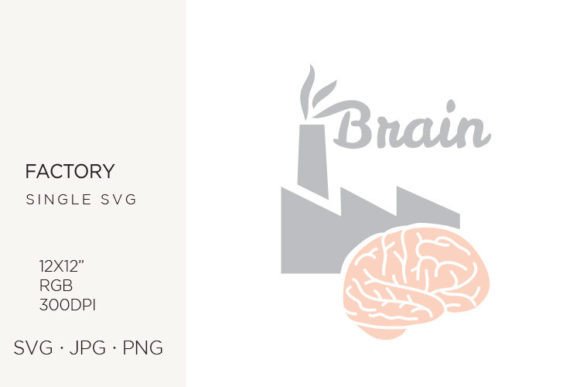
The intersection of organic complexity and industrial precision offers a compelling visual metaphor for modern design. The Human Brain and Factory concept captures this duality, merging the intricate neural pathways of human cognition with the structured, mechanical efficiency of manufacturing. For designers, educators, and content creators, finding high-quality digital assets that accurately represent this fusion is essential. This article explores the specific attributes of vector-based artboard files sized at 12 x 12 inches with a 300 DPI RGB color palette, available in SVG, JPG, and PNG formats. By understanding the technical specifications and creative potential of these graphics, you can make informed decisions about how to integrate them into your projects.
Understanding the Visual Metaphor
The Human Brain and Factory imagery is not merely decorative; it serves as a powerful symbol for industries ranging from technology and education to psychology and manufacturing. The brain represents innovation, thought processes, and biological intelligence, while the factory signifies production, systems, and output. When combined, these elements suggest a seamless workflow where ideas are transformed into tangible results. This visual narrative is particularly effective for businesses that want to highlight their ability to turn abstract concepts into concrete products or services.
Unlike generic stock illustrations that may lack depth or specificity, professionally crafted vector graphics allow for a nuanced representation of this theme. The use of clean lines and scalable shapes ensures that the details of both the neural structures and the mechanical components remain sharp, regardless of the final output size. This clarity is crucial when communicating complex ideas to an audience that values both creativity and reliability.
Technical Specifications and File Formats
When evaluating digital graphics for professional use, technical specifications play a pivotal role in determining suitability. The Human Brain and Factory files discussed here are created in Adobe Illustrator, a industry-standard vector program. This origin ensures that the artwork is resolution-independent, meaning it can be scaled up or down without losing quality. The artboard size of 12 x 12 inches provides a square format that is versatile for various applications, from social media posts to printed materials.
The availability of multiple file formats—SVG, JPG, and PNG—caters to different workflow needs. SVG (Scalable Vector Graphics) is ideal for web design and digital interfaces because it remains crisp on all screen resolutions and can be manipulated with CSS. JPG files are suitable for photographs and complex images where file size is a concern, though they do not support transparency. PNG files offer lossless compression and support transparent backgrounds, making them perfect for layering graphics in composite designs. All files are provided in an RGB color palette, which is optimized for digital displays, ensuring vibrant and accurate colors on screens.
The 300 DPI (dots per inch) resolution is a critical factor for print quality. While vector files are inherently scalable, having a high-resolution raster version ensures that any printed output, such as brochures or posters, maintains sharpness and detail. This combination of vector flexibility and high-resolution raster options provides a comprehensive toolkit for designers working across both digital and print mediums.
Comparing Vector Assets to Raster-Only Alternatives
One of the primary decisions designers face is choosing between vector-based assets and raster-only images. While raster images (such as standard JPEGs or PNGs created in Photoshop) are sufficient for some uses, they have inherent limitations when it comes to scaling. Enlarging a raster image beyond its original dimensions often results in pixelation and loss of detail. In contrast, the Human Brain and Factory vector files can be resized infinitely without degradation, making them a more versatile long-term investment.
Furthermore, vector files allow for greater customization. Designers can easily change colors, adjust line weights, or modify individual elements within the illustration using software like Adobe Illustrator. This level of control is not possible with flattened raster images. For projects requiring brand consistency, the ability to tweak the color palette to match specific corporate identities is a significant advantage. However, it is important to note that working with vector files requires a certain level of technical proficiency. For users who prefer a plug-and-play solution without editing capabilities, high-resolution PNGs may be a more straightforward choice.
Practical Applications and Use Cases
The versatility of the Human Brain and Factory graphics makes them suitable for a wide array of creative projects. Below are several practical applications where these digital elements can enhance visual communication:
- Logo Design: The symbolic nature of the brain and factory combination makes it an excellent foundation for logos representing tech startups, educational institutions, or consulting firms. The vector format allows for simplification and adaptation to various logo lockups.
- Wall Art and Home Decor: High-resolution prints of these graphics can serve as striking wall art in offices, classrooms, or creative studios. The 12 x 12 inch artboard size can be tiled or framed individually to create a cohesive gallery wall.
- Stationery and Invitations: The clean lines and professional aesthetic lend themselves well to business cards, letterheads, and event invitations. The transparent background option in PNG files facilitates easy integration into existing templates.
- Handmade Craft Items: Crafters can use these designs for sublimation printing on mugs, t-shirts, and tote bags. The vector files ensure that the design remains crisp even when applied to curved or textured surfaces.
- Web and Graphic Design: Web designers can incorporate SVG versions of these graphics into landing pages, blog headers, or infographics. The small file size of SVGs contributes to faster loading times, enhancing user experience.
- Party Decor and Announcements: For themed events focused on innovation, science, or industry, these graphics can be used on banners, cupcake toppers, and digital announcements.
Evaluating Fit: When to Choose This Resource
Deciding whether the Human Brain and Factory vector set is the right choice depends on your specific project requirements and technical skills. If your work involves frequent resizing, multi-platform deployment, or brand customization, the vector format offers undeniable benefits. The ability to edit individual components in Adobe Illustrator allows for a level of personalization that pre-made raster images cannot match.
However, there are scenarios where alternative resources might be more appropriate. If you lack access to vector editing software or the time to customize assets, ready-to-use raster templates may be more efficient. Additionally, if your project requires photorealistic imagery rather than stylized illustrations, a 3D render or photograph might better serve your narrative. It is also worth considering the color mode; since these files are in RGB, they are optimized for digital use. If your primary output is professional offset printing, you may need to convert colors to CMYK, which can sometimes result in slight shifts in hue.
Making an Informed Decision
In the crowded marketplace of digital assets, understanding the technical and creative implications of your choices is key to successful design. The Human Brain and Factory vector collection offers a balanced solution for those seeking high-quality, adaptable graphics. By providing multiple file formats and maintaining high resolution, these assets bridge the gap between digital flexibility and print readiness.
Before purchasing or downloading, consider your end goals. Are you designing for screen or print? Do you need to customize colors or shapes? Will the image be scaled significantly? Answering these questions will help you determine if this vector set aligns with your needs. Ultimately, the value of these graphics lies in their ability to convey complex ideas with clarity and style, supporting your creative vision across a diverse range of applications.
By leveraging the strengths of vector technology and understanding the symbolic power of the brain and factory motif, you can create impactful designs that resonate with your audience. Whether you are a seasoned graphic designer or a hobbyist crafter, these tools provide the foundation for professional-quality results.